PC gaming hardware is changing again. For years, 8GB graphics cards were one of the most common choices for mainstream gaming PCs. That position is now starting to change.
Valve’s July 2026 Steam Hardware Survey shows that 16GB of video memory has become the most common VRAM amount among surveyed systems. The 16GB group reached 25.90%, while 8GB systems accounted for 25.32%.
The difference is small, but the trend matters. More PC gamers now use graphics cards with larger amounts of VRAM. New GPUs also continue to move toward higher memory capacities.
Does that mean your 8GB graphics card needs an immediate upgrade? Not necessarily.
An 8GB GPU can still deliver a good experience in many games. Resolution, texture settings, ray tracing, game design, and optimization all affect how much VRAM a game needs.
The better question is whether 8GB still fits the games you play and the settings you expect.
If you are already trying to improve performance, read our best PC settings to boost FPS without ruining graphics. A few smart settings changes can often extend the useful life of an older graphics card.
Why 16GB VRAM Is Becoming More Common
VRAM is the memory built into or used by your graphics card. Games use it to store textures, frame data, lighting information, geometry, effects, and other graphics assets.
Higher resolutions can increase memory use. Large texture packs can do the same. Ray tracing may also place more pressure on the graphics system.
Modern games have become larger and more detailed. Developers can now use higher-resolution textures, bigger environments, more complex lighting, and detailed character models.
That does not mean every game needs 16GB. Competitive games, indie titles, older releases, and lighter games may use far less memory.
Still, Valve’s latest numbers show where PC hardware is moving.
According to the official Steam Hardware and Software Survey, 16GB VRAM reached 25.90% in July 2026. The 8GB tier remained close behind at 25.32%.
What the Steam Hardware Survey Really Tells Us
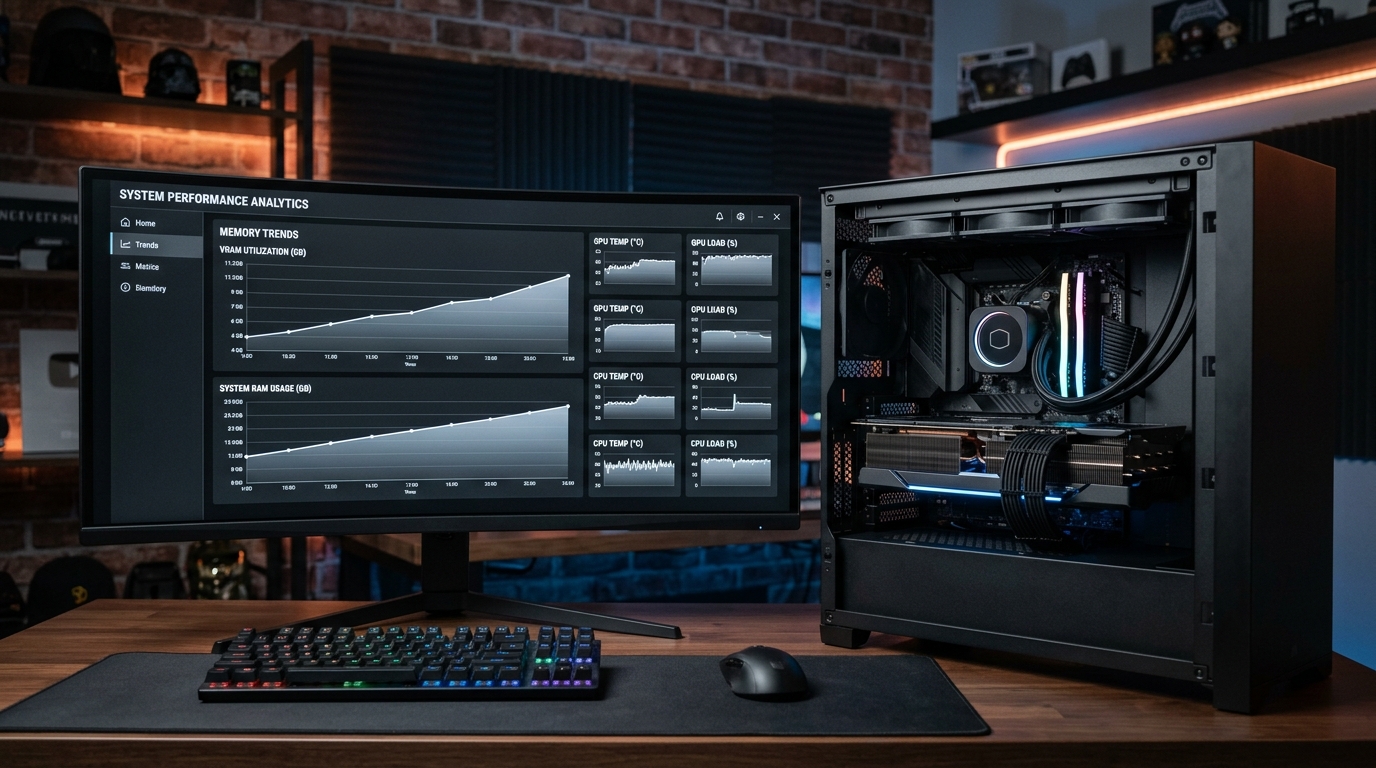
The Steam Hardware Survey gives us a broad view of hardware used by Steam players who take part in the survey. Valve runs it every month.
The July numbers show an important change, but they need context.
First, 16GB becoming the largest single VRAM group does not mean most PC gamers have 16GB graphics cards. A 25.90% share is only about one quarter of surveyed systems.
Second, 8GB remains extremely common. Its share sits only slightly below 16GB.
Other memory levels also remain in use. Players have systems with 4GB, 6GB, 10GB, 12GB, 24GB, and other configurations.
The survey therefore shows a transition rather than an overnight replacement.
Gamers are moving toward more VRAM, but millions of PCs still use lower-memory graphics cards.
16GB Becoming Number One Does Not Make 8GB Obsolete
Hardware discussions often turn a small trend into a simple rule. That can lead to bad buying decisions.
Seeing 16GB at the top of the Steam chart does not mean an 8GB card suddenly became slow. Your GPU performs the same today as it did before the survey changed.
Instead, the result tells us where newer PC builds are heading.
Graphics card makers now offer more models with 12GB or 16GB of memory. Players who upgrade also tend to keep a GPU for several years. Buying more VRAM can therefore make sense when the price difference is reasonable.
Your current card is a different question.
If your games run smoothly and look good, you do not need to replace a GPU because of a survey chart. Upgrade when your hardware stops meeting your actual needs.
Resolution Has a Big Effect on VRAM Needs
Your target resolution can change how much graphics memory you need.
1080p gaming usually places less pressure on VRAM than 1440p or 4K gaming. That makes many 8GB cards easier to use at 1080p.
Moving to 1440p can increase the load. High-resolution textures and demanding effects can push memory use higher.
4K creates even more pressure because the GPU has to work with far more pixels.
This does not create a fixed VRAM rule. One 4K game may run well with moderate settings, while another may struggle.
Instead of focusing only on the number printed on the graphics card box, look at the full workload.
Resolution, texture quality, ray tracing, shadows, geometry, anti-aliasing, and game optimization all work together.
When 8GB VRAM Can Still Be Enough
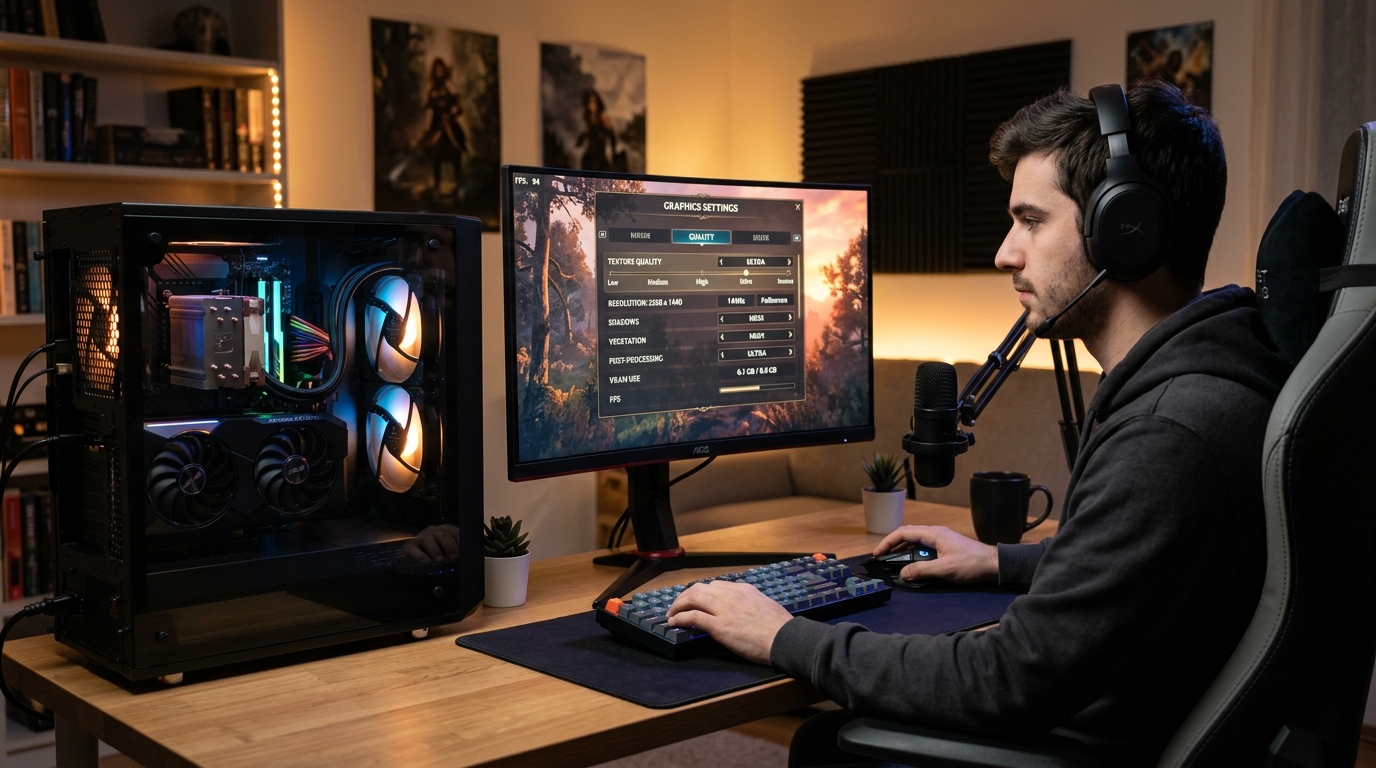
An 8GB graphics card can still make sense in 2026, especially for 1080p gaming.
Many popular games do not need extreme graphics settings. Competitive players often lower settings on purpose because they care more about high frame rates and clear visibility.
Older games also remain easy to run on modern hardware. The same applies to many indie games, esports titles, strategy games, platformers, and less demanding RPGs.
Your expectations matter as much as the hardware.
If you want 1080p gaming at medium or high settings, an 8GB GPU can remain useful. If you expect 4K, ultra textures, maximum ray tracing, and years of future AAA releases, 8GB becomes harder to recommend.
This is why VRAM should not be judged alone.
Lower Texture Settings Before Lowering Everything
When a game uses too much VRAM, texture quality is often one of the first settings worth checking.
Ultra textures can use a large amount of memory. The visual difference between ultra and high may also be small during normal gameplay.
Try dropping textures one level before making major changes elsewhere.
You can also reduce ray tracing, shadow quality, reflections, and other heavy effects. These changes may improve both frame rate and memory use.
Avoid turning every option to low without testing. That can make the game look much worse while solving a problem that only needed one or two changes.
Our PC graphics settings guide explains which options usually give the best performance gains.
Upscaling can help too. DLSS, FSR, and XeSS can reduce the internal rendering load while keeping the final image close to your target resolution.
Read our guide to DLSS, FSR, XeSS, and frame generation if you want to understand how these tools affect image quality and performance.
Should You Upgrade From an 8GB GPU in 2026?
Do not upgrade simply because 16GB now leads the Steam survey.
Start with your current experience.
Are games showing texture problems? Do you see heavy stuttering when entering new areas? Are newer games forcing you to reduce textures more than you want? Does your GPU struggle at your monitor’s native resolution?
If the answer is yes, an upgrade may make sense.
If your games still run well, keeping your current GPU can save a lot of money.
VRAM is also only one part of graphics performance. A slow GPU with 16GB of memory does not automatically beat a faster GPU with less memory.
Graphics processing power, memory bandwidth, architecture, drivers, cooling, and game support all matter.
How Much VRAM Should Your Next GPU Have?
If you are buying a new gaming GPU in 2026, think about how long you plan to keep it.
For a basic 1080p system, 8GB can still work. It makes the most sense when the card is inexpensive and you understand its limits.
For a new midrange build, 12GB gives you more breathing room. It can be a practical choice for 1080p and 1440p gaming.
Sixteen gigabytes is becoming an attractive target for gamers who want stronger long-term flexibility. The Steam survey also shows that this amount has become much more common.
High-end gamers may choose even more memory, especially for 4K gaming, heavy mods, creative work, or other GPU-intensive tasks.
Do not pay for memory you will never use, though. A balanced GPU remains more important than chasing the largest VRAM number.
Upgrade for Your Games, Not for a Spec Sheet
The best upgrade solves a real problem.
Start by listing the games you play most. Check your target resolution and frame rate. Then decide which graphics settings matter to you.
A competitive player using a 1080p monitor may have very different needs from someone playing cinematic AAA games on a 4K display.
Your monitor matters too. Buying a powerful new GPU for an old 1080p 60Hz display may not give you the improvement you expect.
The rest of your setup can also affect the experience. CPU performance, RAM, storage, cooling, and display quality should stay reasonably balanced.
If you are planning several upgrades, our gaming gear upgrade guide can help you decide where your money will make the biggest difference.
Valve’s July 2026 survey gives PC gamers a useful signal. Sixteen gigabytes of VRAM has moved ahead of 8GB as the most common memory tier among surveyed Steam systems.
That is a meaningful change. It shows that higher-memory graphics cards are becoming normal rather than unusual.
However, 8GB is not dead.
An 8GB card can still work well for 1080p gaming, esports, older games, indie titles, and many modern games with sensible settings.
The limits become easier to see when you push toward higher resolutions, ultra textures, ray tracing, demanding mods, and future AAA releases.
If you already own an 8GB GPU and enjoy the performance, keep using it. There is no reason to replace hardware that still does its job.
If you are buying a new GPU and want to keep it for several years, 12GB or 16GB may give you more flexibility.
PC gaming moves quickly, but smart upgrades are not about chasing every new trend. They are about matching your hardware to the games, settings, resolution, and performance you actually want.