That does not mean every player should buy a portable gaming PC. These devices are powerful, but they also come with trade-offs. Battery life, heat, weight, screen size, operating system, game compatibility, storage, and price all matter. A handheld gaming PC can feel amazing when it fits your habits, but it can feel disappointing if you expect desktop-level performance in every game.
This Progz guide breaks down whether handheld gaming is worth it in 2026, who should buy one, what to check before spending money, and how portable gaming compares with consoles and traditional PC setups. For more related guides, visit our PC Gaming section, browse Gaming Gear, or read our future guide on best PC settings to boost FPS.
Why Handheld Gaming Is Trending Again
The biggest reason handheld gaming is trending is simple: players want flexibility. Not everyone wants to sit at a desk every night. Some players want to continue a game from the couch. Others want a device for travel, lunch breaks, short sessions, or casual grinding. A portable gaming PC gives players a way to access serious games without turning every session into a full setup.
Modern handhelds also benefit from better screens, faster chips, improved controls, cloud saves, and stronger game libraries. Players are no longer limited to basic mobile games or small indie titles. Many handheld gaming PCs can run major PC games, indie hits, retro titles, emulators where legally supported, and cloud gaming services. That variety makes the category more useful than before.
Xbox has also pushed the handheld conversation forward by supporting Windows and Android handheld gaming devices, cloud gaming, remote play, Game Pass, and Xbox Play Anywhere features through its official handheld gaming ecosystem. You can review the official details on the Xbox on Handhelds page.
Portable gaming is about convenience, not maximum power
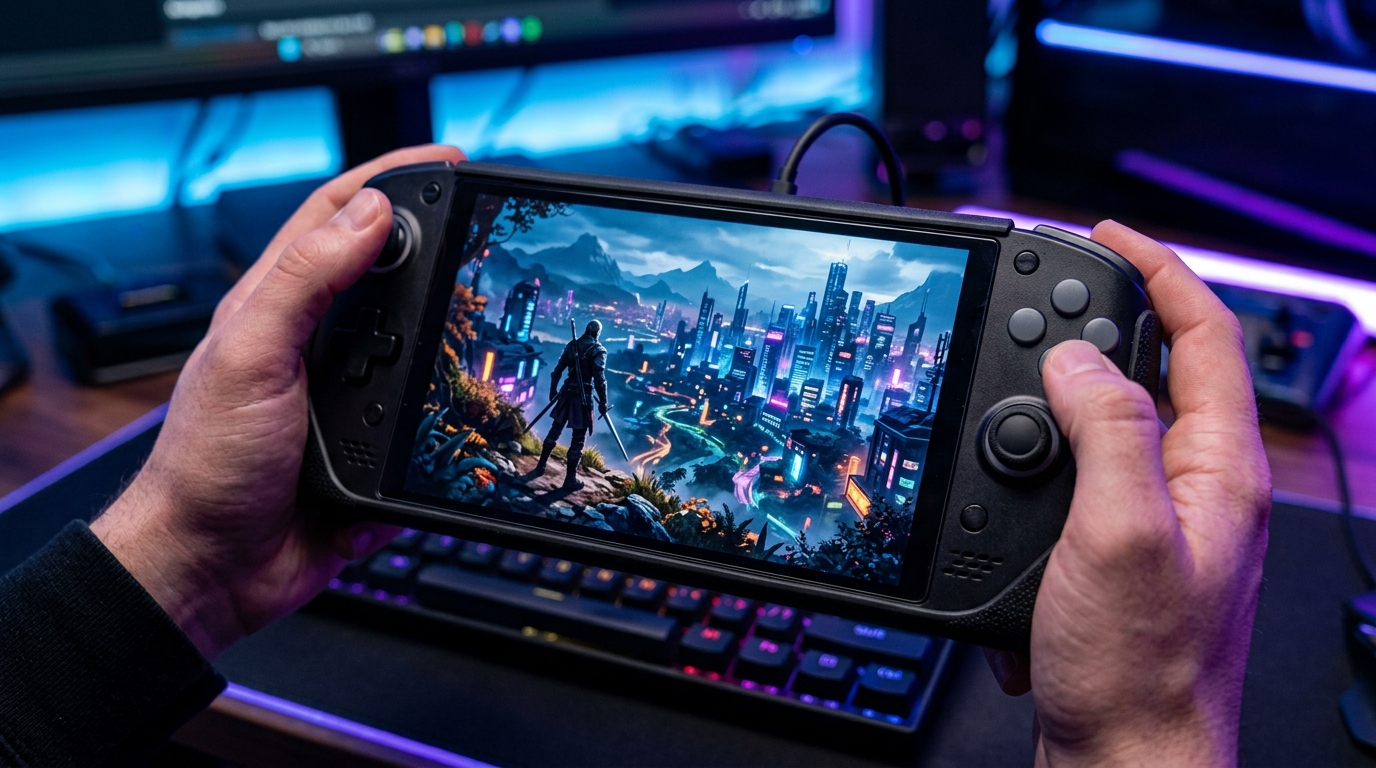
The first thing players need to understand is that handheld gaming is not about beating a desktop PC. A high-end desktop still wins on raw performance, upgrade options, cooling, large monitors, and competitive precision. A handheld gaming PC wins on convenience. It lets you play more often because the device is easy to pick up and use.
This is the real value. If a handheld helps you finish games you would otherwise ignore, it may be worth it. If it lets you enjoy single-player games without sitting at your main desk, that can be a big quality-of-life upgrade. If you only play competitive shooters with a mouse and keyboard, the value may be weaker.
Best for backlog players
Handheld gaming is excellent for backlog players. If your library is full of indie games, RPGs, roguelikes, platformers, older AAA titles, strategy games with controller support, and story-driven adventures, a handheld can help you finally play them. These games often do not need the highest frame rates or ultra settings to feel good.
Players who already own a large PC library may get extra value because they are not starting from zero. A device like Steam Deck OLED is built around the Steam library and offers a portable way to access many existing games. Valve lists the Steam Deck OLED with a 7.4-inch HDR OLED display, up to 90Hz refresh rate, Wi-Fi 6E, and battery life that varies by content.
Best for couch and travel gaming
Handhelds are also strong for couch gaming and travel. A portable device removes friction. You do not need to turn on the TV, open a launcher on your desktop, adjust a chair, or sit in one place. You can play a quick mission, farm resources, test a build, or continue a save file with less effort.
That convenience matters more than many players admit. A game you can start in ten seconds is more likely to get played. For busy players, parents, students, and workers, handheld gaming can turn dead time into progress.
What to Check Before Buying a Handheld Gaming PC
Before buying a handheld gaming PC, focus on practical details instead of hype. The best handheld is not always the most powerful one. The best handheld is the one that fits your games, budget, comfort, and expectations. A beautiful device with poor battery life or awkward software may not be right for you.
Start with your library. Do you mostly play Steam games, Xbox Game Pass titles, Epic Games Store games, emulators, retro collections, or cloud games? Different handhelds handle these ecosystems differently. Some are smoother for Steam. Some are better for Windows-based launchers. Some work best as cloud or remote-play devices.
Also think about how long you play. If you usually play in short sessions, battery life may be less stressful. If you want long flights, long commutes, or extended couch sessions, battery capacity and power settings become more important. The more demanding the game, the faster the battery drains.
Performance depends on the game
Handheld performance is not one fixed number. A lightweight indie game may run beautifully for hours. A huge open-world AAA game may require lower graphics settings, resolution scaling, frame caps, or upscaling. This does not mean handheld gaming is bad. It means players need realistic expectations.
The smartest handheld players learn to tune settings. Instead of chasing ultra graphics, they aim for stable performance. A locked 40 FPS or 45 FPS can feel better than an unstable 60 FPS. Lowering shadows, reflections, crowd density, and post-processing can make a big difference while keeping the game visually enjoyable.
Screen quality matters more than you think
Because handheld screens are small, screen quality matters a lot. Good contrast, brightness, refresh rate, and color can make a game feel better even when settings are not maxed out. An OLED screen, for example, can make darker games, pixel art, and colorful titles look more premium.
Refresh rate also matters, but it should match the device’s real performance. A 120Hz screen sounds great, but many demanding games will not run at 120 FPS on a handheld. The better question is whether the device can deliver stable frame pacing and useful refresh-rate options.
Comfort and controls can make or break the device
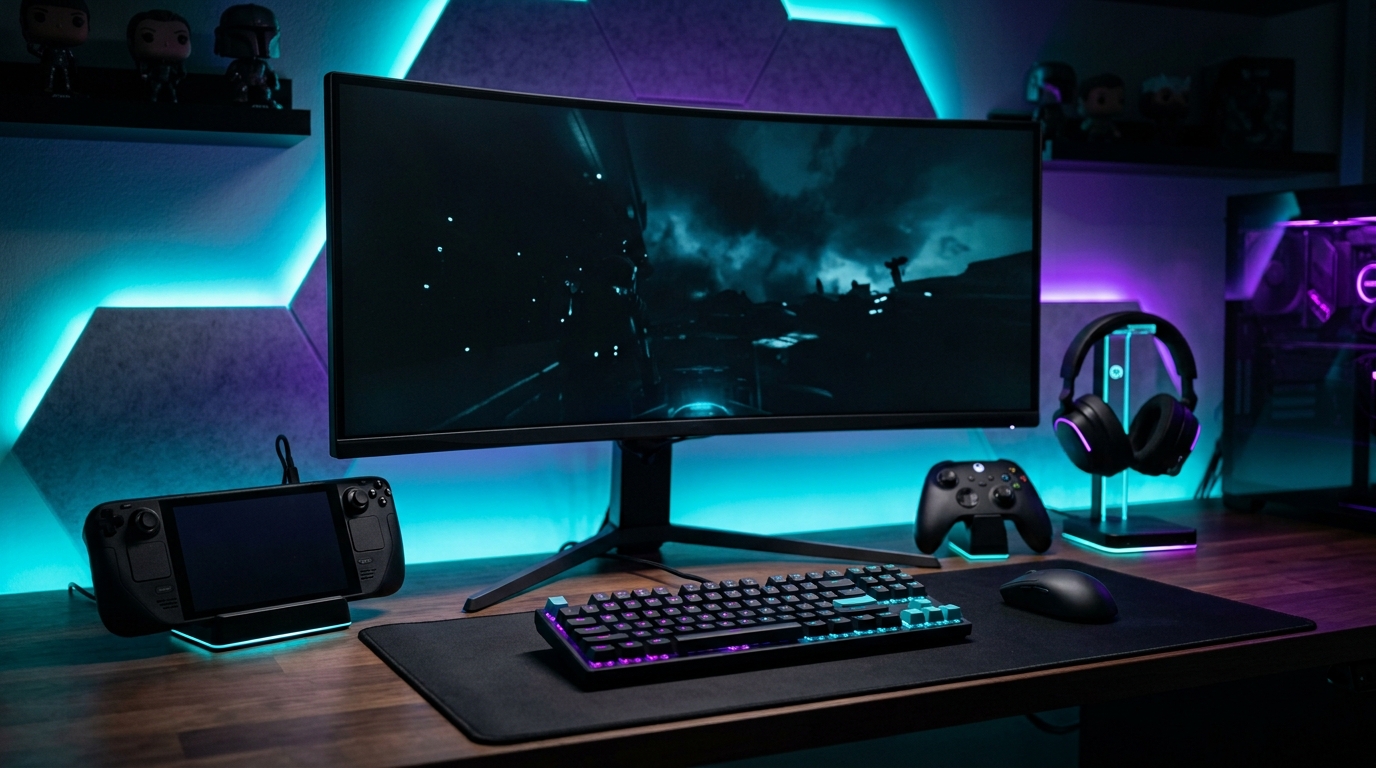
Specs are important, but comfort is just as important. A handheld can have strong hardware and still feel wrong if it is too heavy, too wide, too hot, or uncomfortable during long sessions. Button placement, stick quality, triggers, grip shape, fan noise, and heat management all affect the experience.
Players should also check storage. Modern games are large, and 512GB can disappear quickly. If the device supports microSD cards or an easier SSD upgrade path, that can extend its lifespan. Microsoft’s developer resource hub lists ROG Xbox Ally models with Windows 11 Home, 7-inch FHD 120Hz displays, and different memory and storage configurations, which shows how much specs can vary between handheld models.
Software experience is the hidden factor
The software experience is where many handhelds win or lose. A great handheld should make it easy to launch games, adjust performance, manage controls, update software, and suspend or resume play. If the system feels clunky, players may stop using it even if the hardware is strong.
This is why the handheld category is still evolving. Windows handhelds can offer broad compatibility, but they may need more tweaking. Console-style handhelds may feel smoother, but they can be more limited. Steam-focused devices can feel simple for Steam users, but less direct for other launchers. There is no perfect answer for every player.
So, is a portable gaming PC worth it in 2026? Yes, for the right player. It is worth it if you want flexible gaming, have a strong backlog, enjoy single-player or controller-friendly games, and understand that settings will need adjustment. It is less worth it if you demand maximum graphics, only play competitive games, dislike tweaking, or already have a setup you use every day without issue.
The best move is to buy based on habits, not hype. Look at your actual library. Think about where you play. Decide whether you want Steam simplicity, Windows flexibility, Xbox ecosystem support, or console-style convenience. A handheld gaming PC can be one of the best upgrades for modern players, but only when it solves a real problem in how you play.
For more Progz guides, check our Game Guides, Reviews, PC Gaming, and Gaming Gear categories.